
After several years working together on my treatment, we now keep in touch for any questions and to adjust my medication.
Medical treatment of addictions
Taking the first step to overcome an addiction takes courage. If you are here, you have already taken the most important one. As a psychiatrist specialising in addictions in Málaga, my aim is to offer you a clear, professional path to recovery, in an atmosphere of complete trust and free from judgement.
How do I know if I have an addiction problem?
You may have an addiction problem when the use of a substance (such as alcohol, drugs or medication) or a behaviour (gambling, shopping, screen use, etc.) becomes repetitive, hard to control and has negative consequences on your daily life.
Some common signs of addiction include:
- Loss of control over the use or the behaviour.
- Needing to increase the amount or frequency to get the same effect.
- Physical or emotional discomfort when trying to cut down or stop.
- A negative impact on your health, work, personal relationships or mood.
- Carrying on despite being aware of the harm it causes.
Addiction is a mental health disorder that can be treated effectively. If you have doubts or recognise yourself in any of these symptoms, the best thing to do is to see a psychiatrist specialising in addictions, who can carry out a clinical assessment and offer you personalised treatment.
Many addictions occur alongside another mental disorder – anxiety, depression or bipolar disorder. This is known as dual diagnosis. It requires integrated medical and psychiatric treatment and is precisely what sets a psychiatrist’s practice apart from a residential detox centre. If you are worried about alcohol use, it may help to know how to recognise when someone is an alcoholic. Treatment can take place in person in Málaga or through an online psychiatrist consultation throughout Spain.
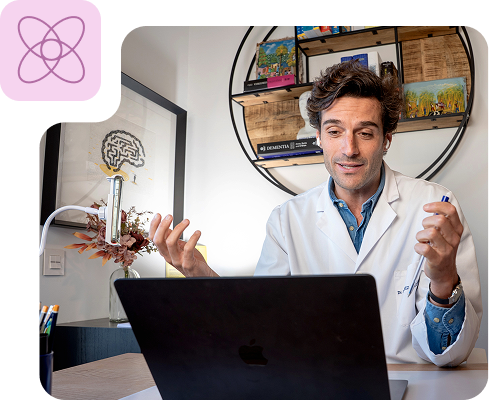
Dr. Carlos Sánchez Menéndez is a registered psychiatrist (Medical Council registration no. 14/3107755) with proven experience in addictions: he received the 2023 National Medicine Award (Premio Nacional de Medicina) in the field of addiction treatment and has served as medical lead at a leading addiction centre. Discover his full career background.
How addictions are assessed and treated

We start with a comprehensive assessment and diagnosis

We design a personalised treatment plan

We intervene and support the family

We provide ongoing follow-up and make adjustments


M.H. Patient
My trusted psychiatrist for years
F.A. Patient
An excellent professional, caring and a great communicator
I’m very happy to have found someone like him. He is helping me a lot with my problems.
Frequently asked questions
How do I know if I need to see a psychiatrist about my substance use?
How do I know if I need to see a psychiatrist about my substance use?
If you feel you have lost control over your use of alcohol or drugs, or over certain behaviours (such as gambling), and this is affecting your work, family or mental health, an assessment is advisable. A psychiatrist who specialises in addictions can diagnose whether there is a dependence and determine how severe it is, so it can be stopped in time.
Do I have to take medication to recover from an addiction?
Do I have to take medication to recover from an addiction?
It is not compulsory, but in many cases it is an essential tool. Medication helps to rebalance the brain chemistry altered by the substance, reducing anxiety and the risk of relapse. As a psychiatrist, I will assess your case individually; the aim is never to “sedate” the patient, but to stabilise them so they can get their life back.
Do you also treat depression or anxiety if I have an addiction?
Do you also treat depression or anxiety if I have an addiction?
Yes, this is known as dual diagnosis and it is very common. Many people use substances to “cover up” pre-existing depression or anxiety. It is vital to treat both problems at the same time: the addiction and the mental disorder. If we only treat the substance use and not the underlying emotional cause, the risk of relapse is very high.
Is the consultation with the psychiatrist confidential?
Is the consultation with the psychiatrist confidential?
Absolutely. Confidentiality is guaranteed by medical confidentiality and data protection law. We understand the stigma surrounding addiction, so we offer a discreet, safe environment where you can speak completely freely without fear of your records being disclosed.
What is the difference between a psychiatrist and a detox centre?
What is the difference between a psychiatrist and a detox centre?
The psychiatrist makes the medical diagnosis, treats dual diagnosis (addiction alongside other mental disorders such as depression or anxiety) and prescribes and supervises treatment on an individual, confidential basis, in person or online. A residential detox centre offers admission and relapse-prevention treatment; the two can complement each other depending on the case.